Expertise matters. Not all opinions are equal. "The Death of Expertise" by Tom Nichols

Updated: Oct 12, 2025
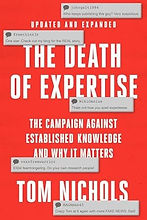
Title: “The Death of Expertise: The Campaign Against Established Knowledge and Why it Matters”
Author: Tom Nichols
Reviewer: Richard Sesek (educator, wantrepreneur)
Amazon Affiliate Link (I get a small commission at no cost to you)
Topic/Intent of book: This book catalogs the systematic “attack” on expertise in its many forms and how this is often motivated by politics. Not all opinions are equal, and we need to acknowledge that fact. Honest mistakes made by experts should not disqualify them from having influence proportionate to their abilities. The impact of the erosion of trust in experts is discussed in detail.
I selected this book because: This book was recommended by my colleague, Dr. John Evans, and the title and summary he provided me were very compelling. I read this book because it hinted at something that I have long believed - expertise has increasingly been questioned and the internet has hastened that process.
Recommendation: I think this book is valuable. This book makes a compelling case for the role of experts and the continued reliance on them after they make honest (key word “honest”) mistakes. There is an anecdote where a student says to a professor “well, my opinion is as good as yours” and the professor responds with “actually, your opinion is NOT as good as mine.” While somewhat arrogant sounding, it reinforces the notion that experts (based on education, experience, certifications, etc.) DO have more educated “guesses” as to what might happen in various scenarios.
I think it is incumbent on all students wishing to receive a college education to study deeply (perhaps more so than they are “asked to” or expected by their actual coursework) and to learn to think critically. This book underscores how a college education is no guarantee of expertise and cautions people about being too quick discount the wisdom of experts.
Major lessons from this book: Attacks on anyone with whom one disagrees and quick categorical denials of someone’s opinions because they are a “liberal professor” or a “conservative businessman” or whatever group one wishes to discredit has a chilling effect on discussion, interaction, and ultimately the policies that governments and institutions adopt. While vexing to read about the erosion of trust in experts, it is important to be aware of this phenomenon so that we, as a society, appreciate and benefit from the expertise of others, even when we do not completely agree with them politically or otherwise.
Book Inspirations: I will pursue other books in this genre and by this author. I have recommended this book to others and included a brief discussion of it my classes. I will also personally work harder to combat those who denigrate expertise (and science in general) for short-term, often political, gain.


Comments